Showing posts with label lesson plans. Show all posts

Saturday, March 9, 2024

Children's Lesson Plans


UNICEF - Lesson Plan English, ages 8 – 13

Full Lesson File

Introduction to Lesson Plans 

These lesson plans are designed to introduce children to the English language using repetition, simple activities, songs and games within a safe ‘circle time’ style environment. The structure and routine of the lessons remain very similar throughout the units. This is important for young children and refugee children who have experienced trauma. This is also important for children who speak different languages to those their teachers speak and to children with special educational needs and behavioural difficulties. 

The teacher (and assistant/s) should be concentrating on supporting children to develop other very important skills throughout the lesson units. These skills, often referred to by teachers as behaviour for learning, include good sitting (sitting with legs crossed, arms/hands in lap, looking at the teacher, not talking etc), good listening (to the adults and other children), concentration, being kind to each other, following instructions and sharing and taking turns. These are skills that children learn when attending school and are important life skills, however, refugee children have often been out of formal education for many years or may never have attended formal schooling. Therefore these skills may need to be taught. 

Teachers and assistants must ensure that time is taken in each lesson to remind children of how they should be sitting before starting, waiting for their turn sensibly without calling out and gaining children’s attention before moving on etc. Children need to learn behaviour for learning to be ready to learn in a classroom, or lesson, environment.


Sunday, July 4, 2021

ESLCO lessons - 2015 plans

ESLCO Lesson Outline from 2015


Intermediate level English - Ontario high school


This is the outline - it is kind of old, but still quite valid. 
lesson plan

Here is the website for the Ontario Ministry of Education ESL program (high school)

This website gives you the guidelines for grades 9 to 12 ESL programs in Ontario - great guidelines!!

http://www.edu.gov.on.ca/eng/curriculum/secondary/esl.html

Friday, March 13, 2020

TESL Ontario Best Practices for Language Teaching

TESL Ontario has a great "Best Practices" page that you can access.  It has many links for:

Academic
Canadian Language Benchmarks
Citizenship
CLARS
Culture and Pragmatics
Curriculum and Lesson Planning
Digital resources
Employment
ESL Literacy
Essential Skills
Financial Literacy
Media
Methodology
New Teachers
Portfolio-Based Language Assessment
Professional Learning
Pronunciation
Special Needs
& More!


Saturday, May 18, 2019

Children's lesson flow


Level 1

Unit   1 – Greetings - Hello ·  Aim: Teach basic greetings – Hello, Hi, Goodbye.
Unit   2 – What’s your name? ·  Aim: To teach kids how to say their names.
Unit   3 – How old are you? ·  Aim: Teach kids how to say their age and learn numbers 1 to 5.
Unit   4 – Numbers – How many? ·  Aim: Teach kids how to count from 1 to 10.
Unit   5 A – Colours – What colour is it? ·  Aim: Teach kids how to describe things through colours.
Unit 5 B - Colours Vocabulary ·  Aim: Teach colours vocabulary
Unit 5 C - Green Monster Colours Lesson ·  Aim: Teach colours through a colours songs
Unit   6 – Fruits – I like apples. ·  Aim: Teach kids names of fruits and how to express likes.
Unit  7 – Body – I have a head. ·  Aim: Teach kids parts of the body.
Unit  8–  Actions  – I can, I can’t. ·  Aim: Teach kids how to express ability using simple action verbs.

Level 2
Unit  1 – Animals – Farms Animals.  ·  Aim: Teach students how to express preference by using vocabulary related to farm animals.
Unit   2 – Family Members ·  Aim: Teach words and expressions used when describing family.
Unit  3 – School bag ·  Aim: To teach words and expressions related to classroom items.
Unit   4 – Actions – Can and Can’t   ·  Aim: Teach action verbs
Unit   5 – Shapes & Sizes ·  Aim: Teach various shapes and adjectives to describe size.
Unit   6 – Demonstrative Pronouns – This/That/These/Those ·  Aim: Teach singular and plurals of nouns and demonstrative pronouns.
Unit   7 – Numbers 10 to 100 ·  Aim: Teach numbers 10 to 100 & pronunciation differences between long & short vowels.
Unit  8 – Toys – Where is it? ·  Aim: Teach words and expressions related to toys and to ask where things are.
Unit  9 –  Days of the week and weekly activities ·  Aim: Teach days of the week and some things we do weekly.
Unit 10 -   Weather – What’s the weather like? ·  Aim: Teach students how to ask about the weather and describe it.
Unit 11 -   Food – What do you want to eat ·  Aim: Teach students about the things we eat and express want

Level 3
Unit  1 – Pets : Why do you like dogs? ·  Aim: Teach names of pets and give a brief description of pets using personality adjectives.
Unit   2a – Time – What time is it? ·  Aim: Teach students how to tell the time and also how to talk about daily routines.
Unit   2b – Time – What time is it? ·  Aim: Teach students how to tell the time using quarter to/past/ half past etc.
Unit   3 – Months & birthdays – When is your birthday? ·  Aim: Teach students months of the year and how to tell dates using months and ordinal numbers.
Unit   4 – Jobs – What people do. ·  Aim: To teach kids how to describe jobs using action verbs.
Unit  5  – Actions – What are you doing? ·  Aim: Students will learn how to describe actions in progress using the present progressive.
Unit   6 – Transport – How do you come to school? ·  Aim: Teach students different means of transport and talk about going around.
Unit   7 – Clothes – What are you wearing today? ·  Aim: To learn to describe what someone is wearing.
Unit   8 – Where is it? – At home ·  Aim: Teach kids prepositions of place, alongside rooms and things at home.
Unit  9a – Vegetables – How much are the carrots? ·  Aim: Teach kids vegetable vocabulary and how to go shopping for veggies.
Unit  10 –  Weather  and clothes  - Put on your sunglasses. ·  Aim: Teach kids how to talk about clothes relative to the weather.
Unit 11 -  Zoo – What does a panda look like? ·  Aim: To teach students how to describe zoo animals by what they eat and look like.


Sunday, October 18, 2015

Action Verbs for Learning Objectives

At the end are some action verbs for your lesson plans:

1st - Create a stem - After completing the lesson, the student will be able to....
After this unit, the student will have .....
By completing the activities, the student will .....
At the conclusion of the course/unit/study, the student will .....

2nd - Add the verb

3rd - Determine the actual product

Sample:: After completing the lesson, the student will be able to listen for the purpose of following directions.

After completing the lesson, the student will be able to explain the meaning of the words ...

After completing the lesson, the student will be able to summarize the plot of ....

********************************************

Action Verbs:
abstract, activate, acquire, adjust, analyze, appraise, arrange, articulate, assemble, assess, assist, associate
breakdown, build
calculate, carry out, catalog, categorize, change, check, cite, classify, collect, combine, compare, compute, contrast, complete, compose, compute, conduct, construct, convert, coordinate, count, criticize, critique
debate, decrease, define, demonstrate, describe, design, detect, develop, differentiate, direct, discuss, discover, distinguish, draw, dramatize
employ, establish, estimate, evaluate, examine, explain, explore, express, extrapolate
formulate
generalize
identify, illustrate, implement, improve, increase, infer, integrate, interpret, introduce, investigate
judge
limit, list, locate
maintain, manage, modify
name
observe, operate, order, organize
perform, plan, point, predict, prepare, prescribe, produce, propose
question
rank, rate, read, recall, recommend, recognize, reconstruct, record, recruit, reduce, reflect, relate, remove, reorganize, repair, repeat, replace, report, reproduce, research, restate, restructure, revise, rewrite
schedule, score, select, separate, sequence, sing, sketch, simplify, skim, solve, specify, state, structure, summarize, supervise, survey, systematize
tabulate, test, theorize, trace, track, train, transfer, translate
update, use, utilize
verbalize, verify, visualize
write

List from Education Oasis

Saturday, January 17, 2015

Tim's Free English Lesson Plans Blog Link

This blogger has some great lesson plan ideas.  Sign up for his blog and receive new plans and updates in your email.

Link: http://freeenglishlessonplans.com

Friday, May 17, 2013

Student Lesson Plan - Future Continuous and Future Perfect


Future Continuous and Future Perfect Lesson Plan

Class: Advanced; Ages 18-20
Time: 60 min

Objective: After this lesson, students will be able to understand the difference between future continuous and future perfect tenses; and they will know important grammar rules, spelling, and pronunciation.

Materials: Chalk, lined paper.

Set-Up: Rows facing the board.

Engage: (5 min) Review learned grammar tenses with a few examples focusing more on the future perfect tense.
(15 min) Discuss the use and meaning of the future continuous, providing many examples, and asking the students to fill in the blanks as you write example sentences on the board.

Study: (20 min) Students write 10 future continuous sentences watching grammar and spelling.
(10 min) The students then hand in their work and the teacher randomly hands work out to the students for peer editing.

Activate: (10 min) After the work is peer edited and returned, students rewrite corrected sentences (if they agree with the corrections). Next ask volunteers to write their sentences on the board and read them aloud. Students give feedback with minimal teacher guidance

Evaluation: For homework, the students write a 3-paragraph essay on what they want to do after they graduate from high school. Essays will be handed in and graded the next day.

Student Lesson Plan - Simple Past Tense


Simple Past Tense Lesson Plan

Intermediate; Ages 12-14
Time: 45 min

Objectives:
-After this lesson, students will have a basic understanding of the simple past, including proper conjugation, spelling, and pronunciation.

Materials:
-Worksheets, prepared overhead sheet

Set-Up:
-The classroom will be set up in rows of partners, facing the front board, leaving plenty of room for the teacher to walk around the classroom and provide help when needed.

Engage:
-(5 min) Quickly review the rules of the simple present as a class on the chalkboard.

-(10 min) As a class, on the chalkboard, present the students with the grammar rules of the simple past. Project a worksheet of simple past sentences with verbs missing.  Ask the students to fill in the blanks aloud until the class seems to have a good grasp of the concept.

-(10 min) With their partner, have students discuss what they did during the last summer vacation. The teacher walks around the class making sure students are using the past tense correctly.

Study:
-(15 min) Students work on an assigned worksheet independently, filling in the blanks with verbs in the correct tense.  The worksheet should include verbs in both the simple past and the simple present.

Activate:
-(5 min) With their partner, compare worksheets to make sure they have the right answers. Go over any troubling sentences as a class.

Evaluation:
-For homework have each student write one paragraph about an event that took place in the past (birthday, holiday, weekend, etc.)
-The next day, students peer edit each other’s paragraphs.  Students then rewrite their paragraphs, read them to the class, and hand them in for grading.

Sample Worksheet
1.            Alexa (go) ________________ to the pet shop to buy a dog.
2.                Freesha (stop) _____________the ball from falling on to the floor.
3.            Lesa (is) ________ at school, until she (notice) ______________ it (is) _______ 7pm.
4.            Teddy (be) ________ driving home when I saw him.
5.            Mack, Jenny, and Javier (be)________ walking their dog when I talked to them last Saturday.
6.            Who (be) ________ sleeping in my bed? It (be, not) _________ James. It (be, not) _________ Julio. Oh, I know! It (be) ________ Roger!
7.            When he was a kid, Ivan (do, not) _________ talk very much. He (do, not) _____________ spend time with his friends. He (spend) _______________ a lot of time alone. He (be) ________ always reading books or listening to music in his room.
8.            The party (be) ________ fun last weekend.
9.            Ernesto (call) ______________ everyday. He (love) _____________ to hear my voice.
10.          The movie (be) ________ really boring. It (be, not) ____  ____ entertaining. We (stop)_____________ watching it before it was over
11.          Peter (swim)_____________ every Tuesday before school.
12.          The zebra (run) ___________ away from the lion, but it could not (run) _________forever.

Simple past tense grammar rules can be found at: http://www.grammarly.com/handbook/grammar/verbs/9/simple-past-tense/
Grammar worksheets can be found at: http://stickyball.net/esl-grammar-worksheets.html

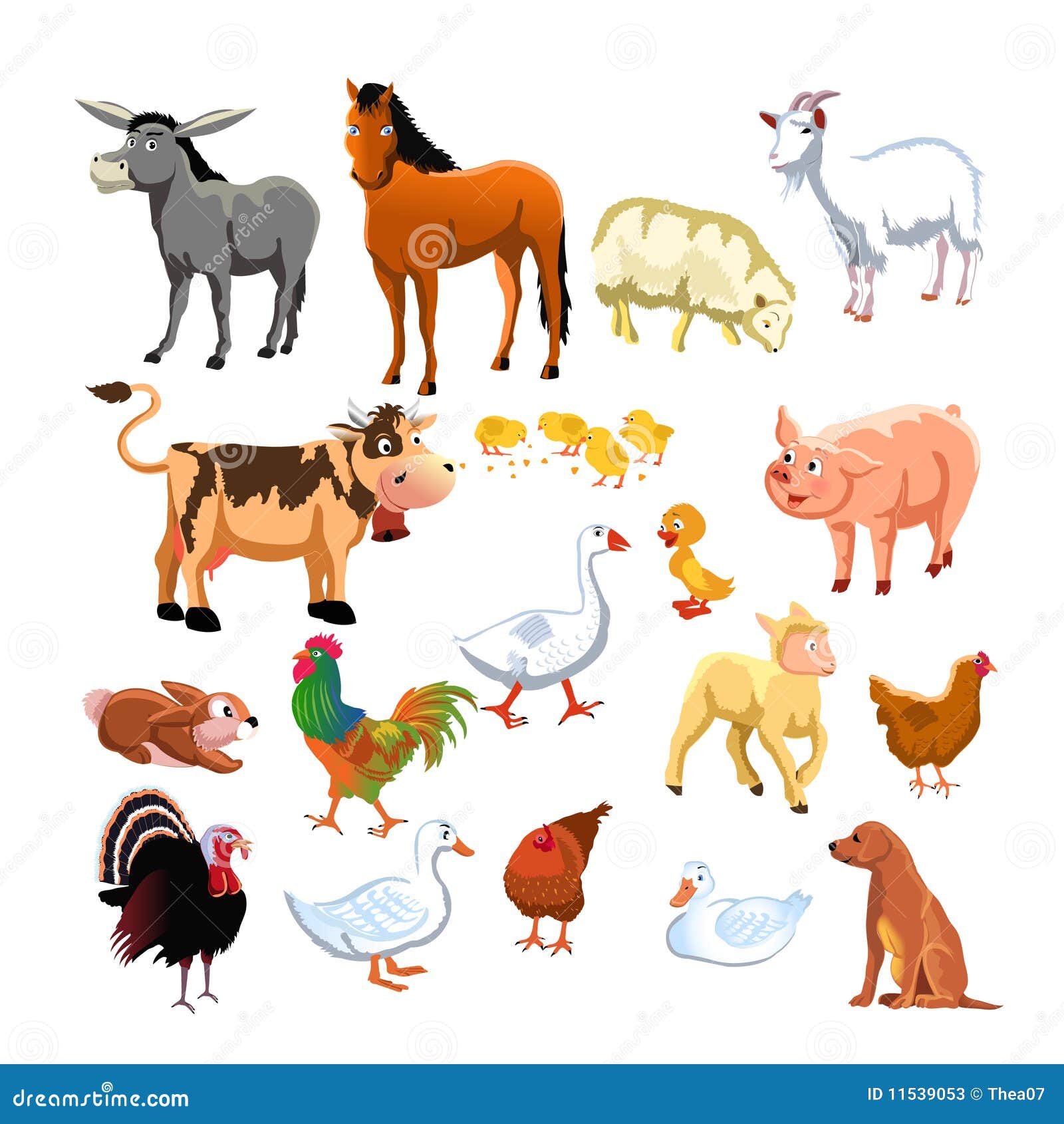
Student Lesson Plan - Basic Vocabulary Building - Farm Animals

Lesson Plan

Class: Beginner
Time: 30 mins

Objective: After this lesson, students will be able to identify the basic animals on a farm.

Materials:Animal figurines, worksheets, chalk

Set up: Semi circle, table at the front of the class with names of animals above

Engage: 10 mins
1)      Sing old McDonald  (https://youtu.be/O4RNIUrLLH0)
2)      While singing use props of animal figures (or pictures) so the kids can visualize the animals.

Study: 10 mins
1)      The teacher will hide various barnyard animals throughout the room before class starts
2)      The children will be asked to find the animals and place the animals with the animal names at the front of the class
3)      Once all the animals have been found the teacher and students will determine if the animals were placed with their proper name

Activate: 10 mins
            1) The students will be given a worksheet with animal names and pictures and will be asked to match the name to the picture

Evaluation:The students will hand in their matching worksheet at the end of class to be evaluated.


Saturday, October 27, 2012

lesson plan template

Lesson Plan
Class: (size, level, age)

Total Time:
Objectives:


Materials:


Set-Up:


Engage: (time?)


Study: (time?)


Activate: (time?)


Evaluation:


Saturday, May 26, 2012

Student Lesson Plan - colours and shapes


Lesson Plan

Class: Ages- 5 to 7 Level- Beginner
Total Time: 60 minutes
Objectives: By the end of this lesson, students will be able to recognize and identify vocabulary for different colours and shapes.

Materials: Construction paper cutouts of all shapes and colours to be learnt (enough for each pair of students to have copies)

Set-Up: Normal class set up

Engage: I Spy. Start off by explanining the game -  “I spy something blue.” And then show them something blue. Do this again and let them guess. Repeat this through all the planned colours and shapes. Then they can take turns. (5-10 min)

Study: Stand at the front of the class with all the shapes in the different colours. Show the class a red square and trace the outline of the square and say “Square,” to the class. Have them repeat this. Show a red triangle to the class and trace the outline of the triangle and say, “Triangle,” to the class. Have them repeat this. Do the same for the circle, rectangle, and diamond. Then go back to the red square, Say “Red square.” Have them repeat this. Show them a blue square, point to it and say “Blue Square.” Have them repeat this. Continue for all shapes and colours until they say the names without being prompted. (25 min)

Activate: Put the students into pairs. Hand out the prepared construction paper cut outs of shapes, starting with two different colours.  Stand at the front of the class and tell them to raise the shape and colour that the teacher says, (explain this through gestures with my own construction cut outs, example. “Blue triangle!” Then hold up the blue triangle.) Do this a couple of times to make sure they understand. Do all the shapes of the two colours that they were given. Hand out the next colour. Repeat. Hand out the next colour. Repeat. Hand out the final colour. Repeat. (25 min)

Evaluation: Were the students able to properly identify and recognize the shapes and colours?  Pay attention to the groupings; watch for one student doing all the work instead of working together; encourage pair work.


student lesson plan - "b" and "v" sounds


Students:
Age: 10-12
Level: Mid-intermediate
Total time: 65 mins
Total Students: 25
Objective:
By the end of the class, students will be able to properly pronounce and recognize the “b” and “v” sounds.
Materials:
Cross section pictures of proper lip positioning for pronouncing the “b” and “v” sound; vocabulary list of different words that have “b” and “v” sounds (for teacher only)
Set-up:
Students’ desks will be aligned in aisles.

Engage: 10 minutes
Write a chart on the board with two sections, “b” and “v.” Start the chart off with some sample words (from the vocabulary list) to get the board list started so they can see and hear the different letters and sounds. Students will then be asked to provide words that have the “b” and “v” sound. Answers will be written on the board in a chart. If students struggle to come up with words, I will ask questions referring to words from my vocabulary sheet, (example: What type of animals are ants and butterflies? What type of bug is yellow and black, makes honey and can sting you? What are the letters A, E, I, O, U called? What do YouTube and TV’s play? )

I will then read students sentences containing words that make the “b” and “v” sound and ask them to answer which sound came first (example: I got my dog a bone before going to the vet). Students will answer by either raising their hand in a closed fist, for “b”, or an open hand, for “v”. First read the example sentence and clench or hold my hand open based on words being said to ensure they understand.
Study: 15 minutes
I will show students that these sounds are common sounds to mix up as they are both voiced - this can be demonstrated by placing their fingers on their throat and feeling the vibration when producing the sound, or by holding a paper in front of their mouth while saying it. Explain this, and then demonstrate. Have them do the same (place fingers on their throat first while saying the sounds, and then have them try it with the paper.)
I will show students the proper mouth position for pronunciation. For “b” both lips are touching and for “v” top teeth are pressed against the bottom lip.
As reinforcement, show this mouth positioning with a Cross section picture of the proper lip positioning or draw it on the board.
Activate: 1 minute per child, 30 minutes
Students will be split up into three groups; they will come up to the front of the class individually. Each student will draw a card and read a “v” or “b” word in front of the class. Students sitting will answer whether they think the word was a “v” or “b” sound. Correct answers will be tallied on the board for each team, utilizing the closed or opened hand raised technique and a winning team will be declared. If the student is unsure, he or she will first quietly pronounce the word to me before reading to the class.

Evaluation: 12 minutes
Do an oral quiz. I will read out a list of 15 “v” or “b” sounding words and students will do their best to spell them. I will collect the slips at the end of class and mark them on proper sound recognition, not spelling.


Saturday, May 12, 2012

student lesson plan - Days of week/Months of year


Date: Feb 11/12

Class: Intermediate    Time: 45 minutes
12-14 children            Age: 11/12
Objectives- To review the days of the week and the months of the year. 
Materials– White board, markers, Word Jumble and matching sheet, Month of the year and Days of the week flashcards
Set-up- The class needs to be setup in groups. 
Engage - Last letter fun - Split the room into 2 teams and use the example word to start. See how many words the teams can come up with in a 5 minute time period. [10 min]
-Have the students sit around in a circle and introduce themselves. Make sure you use days of the week and months of the year in the introduction. [5 min]
Study- Give a word jumble and matching lesson to the class. Pass the activity sheets out and explain what to do and how to do it. Allow them to work in pairs or small groups and take it up in class. [10-15 min]
Activate- Battleship: The class is split into 2 teams; Battleship is effectively the same as the household game. Instead of coordinates though, substitute A1, C5 with January and Friday. [20-30  min]
Evaluation- For homework the students go home and write a paragraph about their day-to-day activities using the vocabulary words.


Understood information before the lesson:

Follow up: This is a review lesson for this class; few seemed to fully grasp these concepts. This lesson will enable the students to have more confidence determining the days of the week as well as the months of the year.

**************************************************************************
Activity Sheets:
Days of the Week/Months of the Year- Review sheet

Unscramble these words to reveal the hidden word!

1)      AHRCM                                                                                           _______________

2)      DYATSUE                                                                                        _______________

3)      AYRUSTDA                                                                                     _______________

4)      AYM                                                                                                 _______________

5)      DDEAWNSYE                                                                                 _______________

6)      MEEDCRBE                                                                                    _______________

7)      OOTREBC                                                                                       _______________

8)      EUNJ                                                                                               _______________

9)      TMBRESPE                                                                                     _______________

10)   UGSTAU                                                                                          _______________

11)   YAFIRD                                                                                            _______________

12)   UJYL                                                                                                _______________

13)   YAMDNO                                                                                        _______________

14)   VRBNMOEE                                                                                   _______________

15)   YRBRUEFA                                                                                      _______________


Read this short passage and answer the questions that follow:

               Mark is a 16 year-old boy from Oakville. He is very busy during the week with school and EVEN on weekends. On Monday, he has math and gym class. On Tuesday he has science class. Mark goes to social studies and English on Wednesday, followed by music class on Thursdays. Finally on Friday Mark must go to art and English class. Every day after school Mark has football practice and all of his homework! Even on SATURDAY Mark goes to a tutor to help with his school work.

1)      On what day does Mark have science class?

2)      How often does Mark go to football?

3)      Does Mark have a tutor?

4)      What does Mark like to do on Sunday’s?

5)      How often does Mark go to Music class?

6)      Mark goes to math class every Monday for an hour. Calculate the mass of the sun.